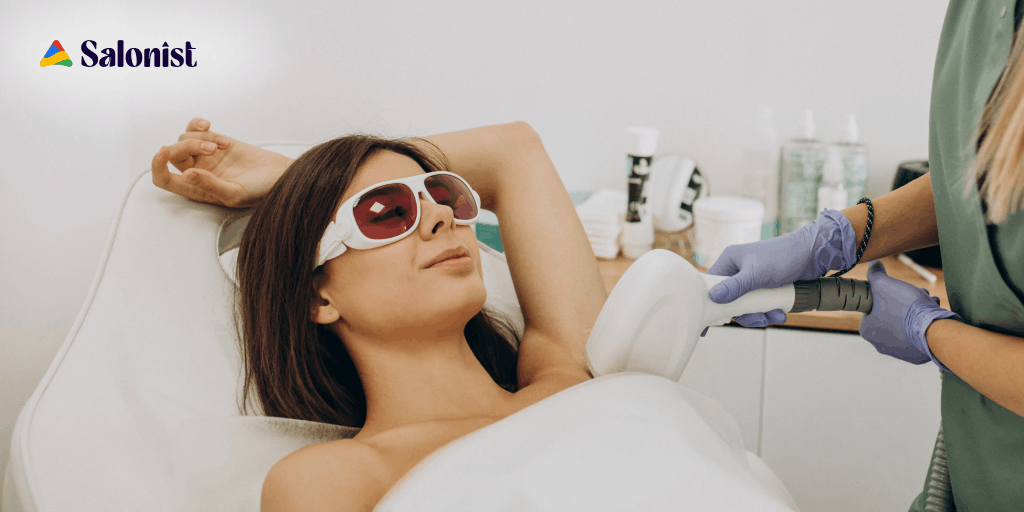
If you are tired of shaving every other day, your first laser hair removal session is probably the appointment you have been putting off the longest. It is also the one most people say they wish they had booked years earlier.
The nerves are normal. Almost everyone walks into a first laser hair removal session unsure whether it will hurt, how much skin they will need to show, or whether it will actually work on their hair type.
This guide walks through the whole thing — preparation, the appointment itself, the recovery window, and the realistic timeline for results.
How Laser Hair Removal Actually Works?
Laser hair removal uses a concentrated beam of light that targets the melanin — the pigment — inside your hair follicle. The follicle absorbs that light, converts it to heat, and the heat damages the structure that produces new hair.
The result is not instant baldness. It is progressive thinning. Each treated follicle either stops producing hair or produces something finer and lighter.
The technology is FDA-cleared for permanent hair reduction, which is the term regulators use deliberately. Most people keep a small amount of fine regrowth and return for occasional maintenance.
Common laser types you will encounter:
- Alexandrite — fast, best suited to lighter skin tones
- Diode — versatile, works across a wider range of skin types
- Nd:YAG — longer wavelength, the safest option for deeper skin tones
A good clinic will tell you which machine they use and why it suits you before your first laser hair removal session begins.
Is a First Laser Hair Removal Session Right for Your Skin and Hair?
This is the single most important question, and the original version of most guides skips it entirely.
Laser hair removal works by finding contrast between hair pigment and skin pigment. That means:
- Works best on: dark, coarse hair against lighter skin
- Works well with the right laser on: dark hair against medium or deep skin tones
- Works poorly on: grey, white, red or very blonde hair — there is not enough melanin for the laser to target
If your hair is light, no laser will do much regardless of how many sessions you book. Electrolysis is the alternative worth asking about.
Deeper skin tones are absolutely treatable, but only with appropriate wavelength and conservative settings. If a clinic does not ask about your skin tone and pigmentation history before your first laser hair removal session, that is a warning sign.
How to Prepare for Laser Hair Removal: Your 7-Day Checklist?
Preparation determines how well your first session goes. Work backwards from your appointment:
7 days before
- Stop sun exposure and tanning beds completely. Tanned skin absorbs laser energy and raises burn risk.
- Stop using self-tanner.
4 weeks before
- Stop waxing, plucking, threading and epilating. The laser needs an intact root to target. Shaving is fine — encouraged, in fact.
24 hours before
- Shave the treatment area cleanly. Surface hair above the skin only scorches and causes unnecessary pain.
Day of
- Arrive with clean, bare skin. No lotion, oil, deodorant, perfume or makeup on the area.
- Skip caffeine if you are anxious — it heightens sensitivity.
- Wear loose clothing over the treatment area.
Learning how to prepare for laser hair removal properly is the difference between a comfortable appointment and a genuinely uncomfortable one.
What Happens During Your First Laser Hair Removal Session?
Your first laser hair removal session will run longer than subsequent ones because of the consultation and patch test.
Here is the sequence:
- Consultation — the technician assesses your skin type on the Fitzpatrick scale, reviews your medical history and medications, and selects machine settings.
- Patch test — a small area is treated and observed. Some clinics ask you to return 24–48 hours later before proceeding.
- Preparation — the area is cleaned, and you are given protective eyewear. This is non-negotiable; laser light can damage the retina.
- Treatment — the handpiece moves across the skin in overlapping passes. You will hear the device pulse and feel a quick snap with each one.
- Cooling — cold air, a chilled tip or cooling gel is applied throughout and afterwards.
| Area | Time |
|---|---|
| Upper lip / chin | 5–10 minutes |
| Underarms | 10–15 minutes |
| Bikini | 15–20 minutes |
| Full legs | 45–60 minutes |
| Back or chest | 30–45 minutes |
Does Laser Hair Removal Hurt?
The honest answer: it is uncomfortable, but brief.
Most people describe it as a rubber band snapping against the skin, followed by a few seconds of warmth. It is widely reported as less painful than waxing, because there is no pulling.
Pain varies by area. Bony or thin-skinned regions — upper lip, bikini line, shins — register more than fleshy areas like thighs or forearms.
Modern devices with contact cooling or cryogen spray have made this significantly more tolerable than the machines of ten years ago. If you are particularly sensitive, ask about topical numbing cream applied 30 minutes beforehand.
Timing matters too: skin is more sensitive in the week before menstruation, so scheduling your first laser hair removal session outside that window helps.
What to Expect After Laser Hair Removal: The First 48 Hours
Immediately afterwards, expect the treated area to look mildly sunburned. This is normal and expected.
First few hours
- Redness and warmth
- Slight swelling around individual follicles, which looks like small raised bumps
24–48 hours
- Redness fades
- Skin may feel tight or slightly itchy
5–14 days
- Treated hairs begin pushing out and shedding. This looks like regrowth but is not — the hairs are being expelled. Do not pluck them; let them fall or gently exfoliate.
Knowing what to expect after laser hair removal prevents the most common mistake: panicking at the shedding phase and assuming the treatment failed.
When to call your clinic: blistering, crusting, oozing, or redness persisting beyond three days.
Laser Hair Removal Aftercare: 6 Rules
Good laser hair removal aftercare protects your results and your skin:
- Avoid heat for 48 hours — no hot showers, saunas, steam rooms or intense workouts. Heat and sweat on compromised skin invites irritation.
- Wear SPF 30+ daily on any exposed treated area, even in winter. Treated skin is photosensitive and prone to pigmentation changes.
- Pause active skincare — no retinoids, AHAs, BHAs or physical scrubs for 3–5 days.
- Keep skin hydrated — a plain, fragrance-free moisturiser or aloe. If you want something more restorative between sessions, gentle hydrating facial treatments support barrier recovery.
- Do not pick or scratch, even when the shedding phase itches.
- Shave, do not wax, between appointments. Waxing removes the root your next session needs.
How Many Laser Hair Removal Sessions Will You Need?
Most people need 6 to 8 sessions, spaced 4 to 6 weeks apart, then occasional maintenance.
The reason is biology. Hair grows in three phases, and lasers only work on follicles in the active growth phase (anagen). At any given moment only 20–30% of your hair is in that phase — which is precisely why one session cannot do the job, and why spacing matters.
| After | Typical Reduction |
|---|---|
| Session 1 | 10–25% |
| Session 3 | 40–60% |
| Session 6 | 70–85% |
| Session 8+ | 85–90%, finer regrowth |
Facial hair, which is hormonally driven, usually needs more sessions than body hair.
Laser Hair Removal Cost: What to Budget
Pricing depends on area size, your location and the number of sessions purchased.
In Dallas and the wider Mat-Su Valley, single sessions typically run $150–$400, with larger areas reaching higher. Package pricing almost always beats per-session rates.
| Area | Per Session |
|---|---|
| Upper lip | $50–$100 |
| Underarms | $75–$150 |
| Bikini | $150–$250 |
| Full legs | $300–$600 |
Ask specifically whether the quoted package covers touch-ups, and what happens if you need more than the estimated number of sessions.
Who Should Not Get Laser Hair Removal?
Be upfront with your provider before your first laser hair removal session if any of these apply:
- Pregnancy — not recommended, purely as a precaution
- Isotretinoin (Accutane) — most clinics require 6 months clear
- Photosensitising medication — certain antibiotics, retinoids, St John’s Wort
- Active infection, eczema or psoriasis in the treatment area
- Recent sun exposure or fresh tan
- History of keloid scarring
- Tattoos in the treatment area — lasers cannot pass over ink
- Recent chemical peels or laser resurfacing
A responsible clinic will screen for all of this. If nobody asks, find another clinic.
Why Winter Is the Best Time to Start Your First Laser Hair Removal Session in Dallas?
Alaska offers a genuine scheduling advantage that most of the country does not.
Laser hair removal requires you to keep treated skin out of the sun, and it works best on untanned skin. In Dallas, the long low-light season from October through March is effectively a perfect treatment window — minimal UV exposure, skin at its natural baseline tone, and covered clothing already the default.
Start a course in late autumn and you finish the standard six-to-eight-session sequence right as the Mat-Su summer arrives.
If you are still comparing providers, you can browse hair removal salons in Dallas to check services, availability and booking options in one place.
7 Questions to Ask at Your Consultation
Take these with you:
- Which laser system do you use, and why is it right for my skin type?
- Are you performing a patch test before my first laser hair removal session?
- What is your practitioner’s certification and how many years of experience?
- How many sessions do you estimate for my area and hair type?
- What does the package price include — and what happens if I need more sessions?
- What is your policy if I have an adverse reaction?
- Can I see before-and-after photos of clients with my skin and hair type?
For Salon and Med Spa Owners
If you run a clinic offering laser treatments, the first laser hair removal session is your highest-stakes appointment. It is where consent forms, patch test records, skin typing and a multi-session treatment plan all have to be captured accurately — and where most clients decide whether to buy a package.
Managing that manually across dozens of clients is where things break. Digital consent forms, automated session-interval reminders and package tracking directly affect completion rates on 6–8 session courses.
Purpose-built med spa management software and aesthetic clinic software handle client records, treatment histories and package balances in one place. An online booking system also captures consultation requests outside business hours — significant when a large share of enquiries arrive in the evening.
For anyone considering opening a waxing and hair removal business, the operational model is similar and worth reviewing first.
Final Thoughts
Your first laser hair removal session is far less dramatic than the anticipation suggests. Prepare properly, be honest about your medical history, follow the aftercare, and give the process the full course of sessions it needs.
Frequently Asked Questions
How long does a first laser hair removal session take?
Between 15 and 75 minutes depending on the area, plus 15–20 minutes for the consultation and patch test.
Can I shave between sessions?
Yes — shaving is encouraged. Avoid waxing, plucking and threading entirely.
Will the hair come back?
Treated follicles are permanently reduced, but hormones can activate dormant follicles over time. Most people need a maintenance session once or twice a year.
Is it safe on darker skin?
Yes, with an Nd:YAG laser and an experienced practitioner. Confirm the clinic’s equipment before booking.
Can I wear makeup afterwards?
Not for 24 hours on facial treatments. Let the skin settle first.
Why is my hair still there after the first session?
That is expected. Shedding starts 5–14 days later, and visible reduction builds across sessions.
Summer heat, sun exposure, and chlorine or salt water strip moisture from your skin and hair faster than any other Read more

If you don’t have your business accounts on social media sites yet, you are living under a cave. The greatest Read more

Owning a salon is bliss, and not everyone gets to enjoy it. However, some things might get you worried, like Read more

Going to the beauty salon for a relaxing facial has its own perks, but not everybody has the time or Read more